If giraffes were predators they would look both hilarious and terrifying while sneaking up on their prey
I’m afraid you’ve missed the predatory giraffes by about 66 million years mate.
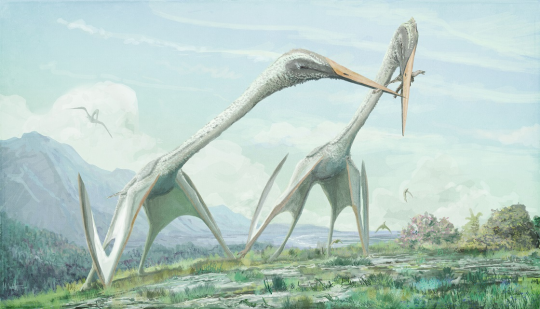
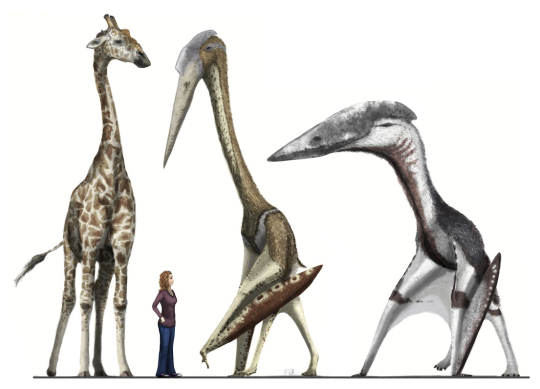
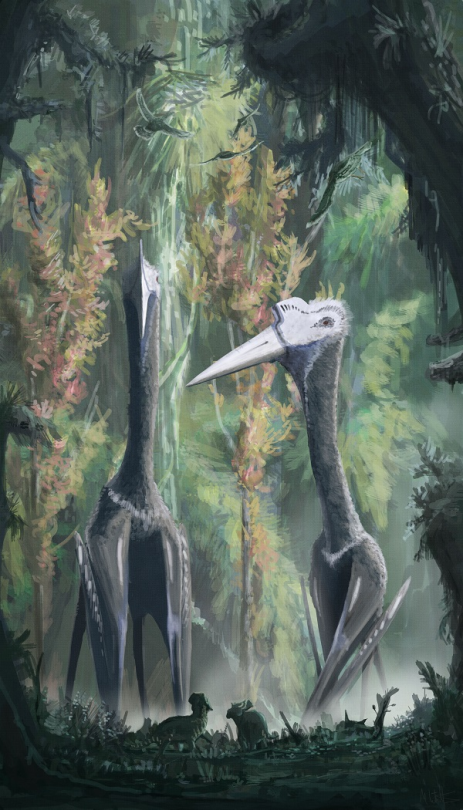
These guys are Azhdarchid pterosaurs, and they were some of the strangest reptiles to ever exist. They were perfectly capable of flight, but their physiology suggests that they may have spent a significant portion of their lives hunting on the ground.
The largest of them could reach over 5 metres tall while standing, and had a 10-metre wingspan. They varied greatly in body type, from the tall, spindly forms of Quetzalcoatlus and Arambourgiania (images 4 and 1-2 respectively) to the heavy brute strength of Hatzegopteryz, a species that may have used its head to bludgeon its prey (images 2 and 3).
There has never been another flying animal before or since to have reached such incredible sizes, nor any predator so intimidatingly tall. Well, not any that we know of yet.
All of these illustrations are by Mark Witton, a palaeontologist and artist who specialises in pterosaurs. This is his blog about palaeontology and the science of reconstructing extinct species. You can find out more about each of these images here, here and here.
People who took the news of feathered dinosaurs like this:
And those who took it like this:
I hate it when people say “science ruined dinosaurs” as though dinosaurs are just some pop culture monster invention and not real things that existed and that we are continuing to make new discoveries about
Amen
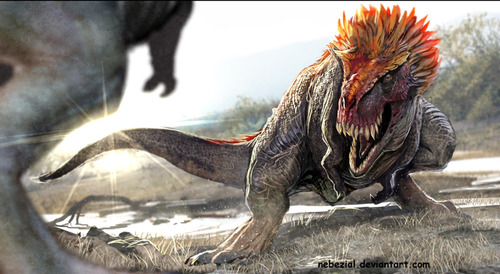
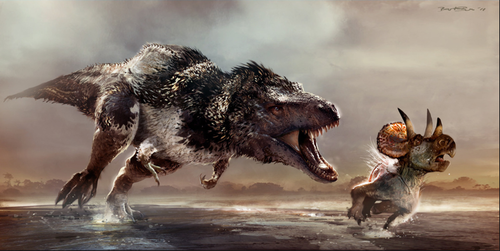
Listen I don’t care if you think feathers on a dinosaur look stupid if a 9 ton apex predator is coming at you at 25 mph, you’re not going to laugh at its feathers. YOU’RE GOING TO HAUL ASS
Most of y’all are afraid of geese and they have feathers.
Imagine a 9 ton goose that’s about to fuck your shit up.
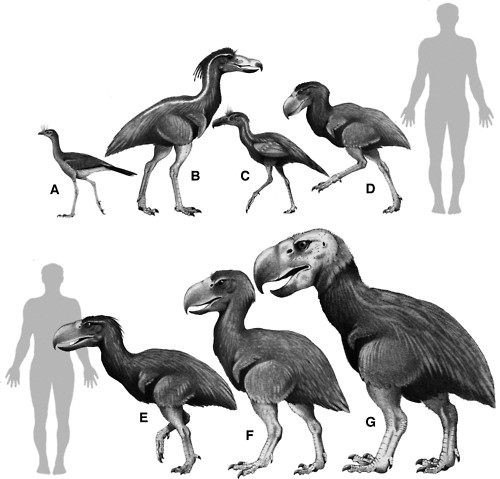
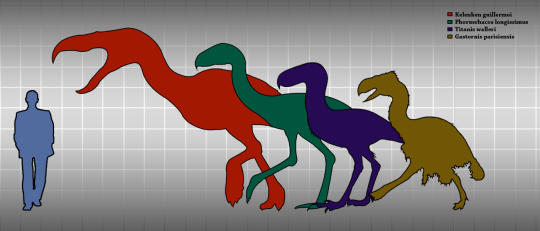
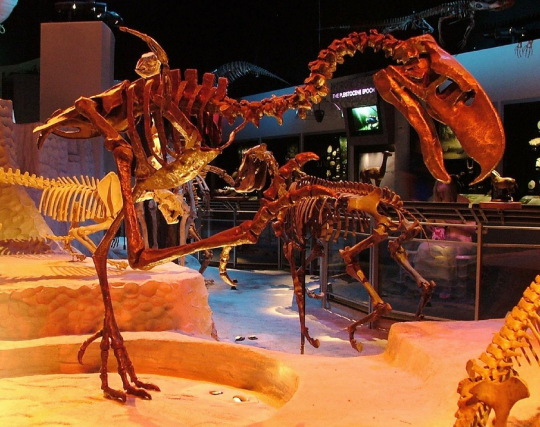
You mean like these?
Ah, the various forms of “terror bird”, the apex predator for roughly 40 million years-ish. Believed to use their beaks as blunt axes to crush the HELL out of prey trapped under their feet because they were not physically capable of the rapid side-to-side motion other animals use to shake their meals to death in their jaws.
Yeah, you’d shit yourself if this came honkin’ at you.
“You’re in the wrong neighborhood, college boy.”
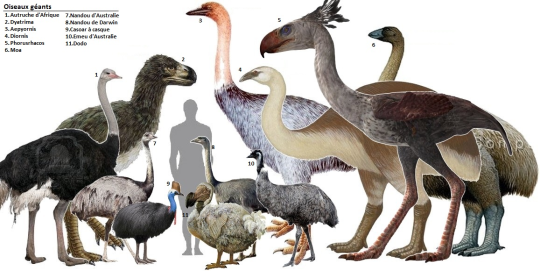
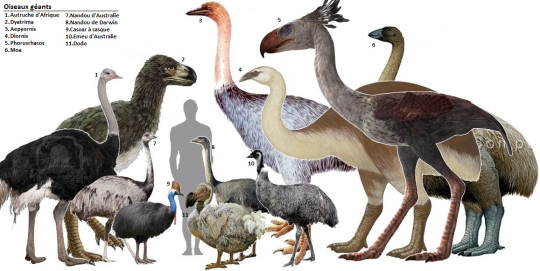
WERE DODOS THAT BIG? I always just assumed they were like guinea fowl
y’all say feathers on a dinosaur doesn’t make it scary but no one wants to hold my parrot.
I live in
Australia, were pretty much 98% of cat owners seem to have outdoor cats, and
then we all equally complain about our fading endangered wildlife and
overpopulated strays. Granted, I grew up in a family that pretty much got a cat
for funsies and then just let it roam and come inside for food and a cuddle. As
I’ve gotten older I’ve definitely given an ear to people who talk about the
wildlife and how dangerous it is for cats but have never been able to fully comprehend
what they mean.
I think after
you work in a general/emergency vet clinic it quickly changes your once-unsure
opinion on outdoor cats, and I confidently say I will never, NEVER have a
roaming cat again.
My first night
working I had some poor owners walking in balling while holding their dying cat
after being hit by a car. I’d never seen a HBC (hit by car), and it is one of
the most terrible things I tell you.
The amount of
times I have “stray HBC cats” rushed in by a founder only for me scan them and
rush them down to the hospital only to get their owner on the phone saying “but
I only just saw her 20 minutes ago”.
Every week now:
Horrific
motor vehicle accidents
Lost
‘strays’ being bought in after an accident and there’s only so much you can do
as you can’t reach their owners
Countless
phone calls asking if their lost cat has come through
Unchipped
wandering cats that now have no home (happens to dogs too, please microchip)
Terrible
dog attacks
Snake
bites
Poisonings
Respiratory
infections
Mysterious
broken limbs
Cat
fight infections and wounds
Cat
fight abscesses
FIV
FeLV
FIP
(arguably indoor cats get these too, but it feels more common in outdoor
animals)
HUGE
worm loads
Very sick cats that their owners didn’t notice before because
they toilet and vomit outside (out of view)
Generally the 16-22 year old cats I see are all pretty much indoor kitties
(injured wildlife) Regardless of how you feed them, they will hunt the wildlife
Not only it is
an epidemic to our slowly-wiltering wildlife population but your cat is not
better off anyway. I will never have
an outdoor cat again, and I don’t really know why I hadn’t realized this sooner
(I lost one of my cats HBC and my other two just never came home one day, I’ve
never had a cat past the age of 7, I loved them so much, but was too young and
it never crossed my mind that it was dangerous for them).
For some reason
no-one ever complains about apartment cats and that we have to keep our dogs
contained, but as soon as we do it for cats it’s “cruel”.
“Cats are
easier than dogs”, damn well they can be, but that doesn’t mean you feed,
cuddle and forget about them. Clean the litter tray, play with them, build a
cat run, get them cat trees and shelves they can climb on, get slow feeders
they have to hunt for, give them a window ledge to hang out on, teach them
walks are fun, love them, cuddle them, they’ll be around longer if you do.
People will
scoff and call you silly and that it’s too hard, because we’re stuck in this
backwards lazy notion that that is “owning a cat” and have never given it
another thought, we need to change it.
I hope every “but my cat is an outdoor cat and does fine” person who waltzes onto this blog to tell us so sees this
The extent of the mess around Billy the elephant – the one activists in LA want the city council to seize from the LA zoo and move to a sanctuary – just keeps getting worse. If you’re not up to date on the story so far, you can read that here.
In the post earlier this week, WADTT covered the fact that the only sanctuary in the United States that Billy could go to, if seized, was the one run by the Performing Animal Welfare Society (PAWS). Of the two elephant sanctuaries that exist in the country, only PAWS takes male elephants – the other, The Elephant Sanctuary (TES) only houses females. It was always a little weird, though, that the sponsor of the motion – Council Member Koretz – never actually specified the name of the sanctuary he’s advocating for moving Billy to. It didn’t make sense. There’s only one place he can go, so why obfuscate that? Well, now it makes way too much sense. The two pertinent pieces of information:
PAWS says they are too full to take Billy(even though they say the offer from their late founder to do so a decade ago still stands) and is stating it would take $5-6 million dollars to build his living quarters, plus $75k a year to cover his expenses. They have not asked for this money from the city directly, but have indicated they are “open to discussing options with city and zoo representatives” if it is decided Billy needs to be moved to a sanctuary. It’s unlikely donations could cover this huge cost, which implies that taxpayers might end up footing a portion of what could end up being – at minimum – a 8.1 million dollar move (assuming Billy lives to be 60, the average age for an Asian elephant in the wild).
There’s a new elephant sanctuary group, supposedly inspired by Billy’s predicament, whose staff are partnered with the LA-based elephant advocacy group leading the charge to “free” Billy.
The problem? The new sanctuary for Billy doesn’t exist.
What’s more, the group behind it – the Kerulos Center – doesn’t have anything ready to guarantee that it ever will. There’s no known master plan for the facility, no available timeline for getting it built, no visible source of funding, and no physical site for building on. The only public information available about their timeline for actually establishing a place for elephants to live is that $2 million dollars has been earmarked for buying a piece of land to build on in Georgia that has not yet been identified, and that they’re currently “working with a team of architects and landscape consultants” to design the facility. Even if construction on the sanctuary could be started tomorrow (assuming all other logistics were suddenly completed), it would take years to actually build a facility capable of housing elephants. What’s more, there is no indication of if the sanctuary – once built – would be aiming for accreditation by any sanctuary accrediting group, which is actually a requirement for wherever Billy goes, as stated in Koretz’s original motion.
The Kerulos Center – an organization which has mostly focused on educating the public about “trans-species psychology” and “animal traumology” since it’s inception in 2009 – is planning to open the All Bull Elephants’ School of Sanctuary (ABES) because of the “critical need for refuge and recovery of hundreds of Elephants suffering in North American zoos and circuses.” The Center is supported by the advocacy group Elephant Guardians of Los Angeles (co-founded by two LA public school teachers, Kiersten Cluster and Marcy Winograd), and the combined effort of the two groups catalyzed the passing of a resolution by the Democratic Party of Los Angeles County to “end the elephant exhibit at the LA Zoo.”
Aside from the fact that the ABES sanctuary doesn’t actually exist yet, there are some pretty serious issues with the idea of sending Billy to any sanctuary run by the Kerulos Center.
Kerulos has stated that the center will be run in accordance with their “10 Principles of Being Sanctuary” and modeled off of an unaccredited elephant sanctuary in Thailand. Kerulos has not indicated what, if any, science-based elephant husbandry standards will inform animal care at ABES, instead stating that their care will be “trauma informed” and that their “curriculum [will be] grounded in principles of being sanctuary which combine science, somatic, and contemplative studies.” Kerulos has also not indicated which, if any, accreditation standard the facility will comply with. What this means is that there is no guarantee that the standard of elephant care at Kerulos will even be on par with, much less better than, what Billy receives at the LA Zoo.
As a further concern, very few people involved with the organization or the planned sanctuary have professional elephant management experience. None of the Board of Directors, nor even the heads of the entire organization have any elephant experience: the Executive Director is an ecologist and psychologist, the President is a psychotherapist who specializes in movement and dance; the head of the Asian Elephant Program is a Ph.D candidate in sociology with a masters degree in psychology; and the Elephant Sanctuary Coordinator has a masters degree in anthrozoology.
Only two members of the current fourteen-person ABES team are confirmed to have ever worked with elephants in a professional capacity: the Director of Elephant Care for their Elephant Liberation Program has worked as a keeper at PAWS for a little under eight years, and a member with no known position was an elephant keeper at the Phoenix Zoo for fourteen years. ABES’ Wildlife Rehabilitator worked at the Atlanta Zoo for a little over a year, although it is unclear if she worked directly with the elephants. While the credentials held by some of the other members of the team hold academic value, without much actual experience in elephant management or even exotic animal care, the overall group seems rather inexperienced to be responsible for designing and running a facility that is mean to house giant, intelligent animals with complicated husbandry requirements.
ABES does have an advisory board, but it is comprised to a large degree of people with areas of expertise that are not actual animal care: two people with psychology Ph.D.s, clinical faculty for the Department of Psychiatry and Biobehavioral Sciences at UCLA, the founder of a sea turtle conservation trust in India, the founder and executive director of a farm sanctuary, the co-founder and executive director a military veteran support organization, the director of a foundation protecting the rights of wild animals and vulnerable communities in South Africa, and an author with a Ph.D in ecology. Most of these board members seem to have specialties that focus on the internal states of animals or the psychology of healing with trauma, not the practicalities of animal management in captive settings. The advisory board members with actual animal experience are the co-founder of an animal rescue charity in Bangalore, the chair of the Elephant Specialist Advisory Group in South Africa, and a Senior Wildlife and Veterinary Advisor for World Animal Protection who completed a PhD on diagnosing health issues in Asian elephants. The only advisory board members with professional elephant management experience in a sanctuary setting are
the founder of the elephant sanctuary in Thailand that ABES will be modeled after, and the founder of Elephant Aid International and The Elephant Sanctuary – but the latter’s reputation is rife with concerning situations that occurred under her oversight at TES, such as an elephant allowed to lay dying for twelve days without being euthanized and a tuberculosis outbreak that infected eight sanctuary staff. While there are at least a couple more people on the ABES advisory board who have elephant management experience than on the actual ABES team, there’s no way to know how much influence or oversight the advisory board will have over the animal care and management practices of the potential sanctuary.
With all the issues around the proposed ABES sanctuary and their parent organization (and there are a lot more than just those directly related to their ability to actually create an appropriate sanctuary for elephants), and PAWS looking to leverage money out of being the only existing sanctuary Billy could go to, it’s no wonder that Council Member Koretz purposefully hasn’t named a favored facility even though Elephant Guardians of LA has majorly influenced his actions. He has no good options. Koretz either has to convince the city to send Billy to the only elephant sanctuary in the country that can take him right now, for a huge amount of money, or he has to commit to leaving Billy at the zoo until he can eventually be moved to a sanctuary whose quality of care and accreditation status cannot be guaranteed… if it ever actually gets built.
Please consider reblogging this post if you consider the information in it important, as the number of external inks in it makes it unlikely to show up in Tumblr’s tagging system.





 PiraticOctopus