is “chai” a TYPE of tea??! bc in Hindi/Urdu, the word chai just means tea
its like spicy cinnamon tea instead of bland gross black tea
I think the chai that me and all other Muslims that I know drink is just black tea
i mean i always thought chai was just another word for tea?? in russian chai is tea
why don’t white people just say tea
do they mean it’s that spicy cinnamon tea
why don’t they just call it “spicy cinnamon tea”
the spicy cinnamon one is actually masala chai specifically so like
there’s literally no reason to just say chai or chai
They don’t know better. To them “chai tea” IS that specific kind of like, creamy cinnamony tea. They think “chai” is an adjective describing “tea”.
What English sometimes does when it encounters words in other languages that it already has a word for is to use that word to refer to a specific type of that thing. It’s like distinguishing between what English speakers consider the prototype of the word in English from what we consider non-prototypical.
(Sidenote: prototype theory means that people think of the most prototypical instances of a thing before they think of weirder types. For example: list four kinds of birds to yourself right now. You probably started with local songbirds, which for me is robins, blue birds, cardinals, starlings. If I had you list three more, you might say pigeons or eagles or falcons. It would probably take you a while to get to penguins and emus and ducks, even though those are all birds too. A duck or a penguin, however, is not a prototypical bird.)
“Chai” means tea in Hindi-Urdu, but “chai tea” in English means “tea prepared like masala chai” because it’s useful to have a word to distinguish “the kind of tea we make here” from “the kind of tea they make somewhere else”.
“Naan” may mean bread, but “naan bread” means specifically “bread prepared like this” because it’s useful to have a word to distinguish between “bread made how we make it” and “bread how other people make it”.
We also sometimes say “liege lord” when talking about feudal homage, even though “liege” is just “lord” in French, or “flower blossom” to describe the part of the flower that opens, even though when “flower” was borrowed from French it meant the same thing as blossom.
We also do this with place names: “brea” means tar in Spanish, but when we came across a place where Spanish-speakers were like “there’s tar here”, we took that and said “Okay, here’s the La Brea tar pits”.
Or “Sahara”. Sahara already meant “giant desert,” but we call it the Sahara desert to distinguish it from other giant deserts, like the Gobi desert (Gobi also means desert btw).
Languages tend to use a lot of repetition to make sure that things are clear. English says “John walks”, and the -s on walks means “one person is doing this” even though we know “John” is one person. Spanish puts tense markers on every instance of a verb in a sentence, even when it’s abundantly clear that they all have the same tense (”ayer [yo] caminé por el parque y jugué tenis” even though “ayer” means yesterday and “yo” means I and the -é means “I in the past”). English apparently also likes to use semantic repetition, so that people know that “chai” is a type of tea and “naan” is a type of bread and “Sahara” is a desert. (I could also totally see someone labeling something, for instance, pan dulce sweetbread, even though “pan dulce” means “sweet bread”.)
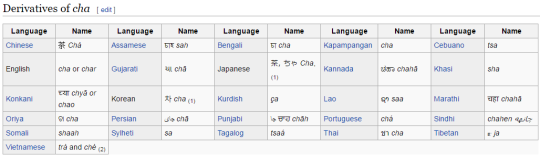
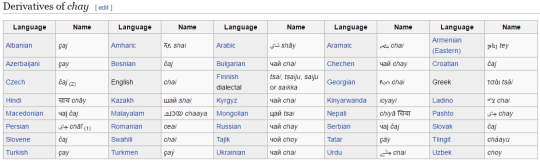
Also, specifically with the chai/tea thing, many languages either use the Malay root and end up with a word that sounds like “tea” (like té in Spanish), or they use the Mandarin root and end up with a word that sounds like “chai” (like cha in Portuguese).
So, can we all stop making fun of this now?
Okay and I’m totally going to jump in here about tea because it’s cool. Ever wonder why some languages call tea “chai” or “cha” and others call it “tea” or “the”?
It literally all depends on which parts of China (or, more specifically, what Chinese) those cultures got their tea from, and who in turn they sold their tea to.
The Portuguese imported tea from the Southern provinces through Macau, so they called tea “cha” because in Cantonese it’s “cha”. The Dutch got tea from Fujian, where Min Chinese was more heavily spoken so it’s “thee” coming from “te”. And because the Dutch sold tea to so much of Europe, that proliferated the “te” pronunciation to France (”the”), English (”tea”) etc, even though the vast majority of Chinese people speak dialects that pronounce it “cha” (by which I mean Mandarin and Cantonese which accounts for a lot of the people who speak Chinese even though they aren’t the only dialects).
And “chai”/”chay” comes from the Persian pronunciation who got it from the Northern Chinese who then brought it all over Central Asia and became chai.
China’s netizens are all in a twitter over the account of a carpenter who was commissioned to make a cinnabar red high-backed chair with the finials at the top to be “in the shape of dragons’ heads” (chéng lóngtóu 成龍頭). Unfortunately, he misinterpreted the directions to mean “[in the shape of] Jackie Chan’s head” (“Chénglóng tóu 成龍頭”).
LMAO ok so to elaborate on this absolute gem, notice how the characters provided for “in the shape of dragons’ heads” and “[in the shape of] Jackie Chan’s head” are identical? That wasn’t a typo.
The thing you need to understand about Chinese names is that they all have meaning. And I don’t mean that in the sense of “if you trace the etymology back through two languages it has its roots in a Hebrew phrase that means “God is my ____” that many Western names have. I mean that in the sense of “almost all of these words are still in regular use today and my parents very literally named me “pretty [and] wise” in Chinese.
(Sidenote: This is why we get annoyed at made-up ‘Chinese’ names that just pull two random vaguely Chinese-sounding syllables together. It is blindingly obvious when it’s not a real name).
成
(chéng) means “to become”, “to turn into”. 龍 (lóng)
is “dragon”. Thus, Jackie Chan’s Chinese stage name,
成龍 (Chénglóng), literally means “become dragon”. (頭 (tóu), of course, means “head”)
(Further sidenote: This is actually a bit of a pun/reference. Specifically, it is a reference to Bruce Lee, whose stage name was 小龍 (Xiǎolóng), or, “Little dragon”. So Jackie’s chosen stage name means both “become dragon”, and “become [like] Bruce Lee”)
The other thing you need to know about Chinese is that we don’t put spaces between terms in written text.
What all this means is that the way you’d write “[carve] into dragon heads” can be identical to the way you’d write “[carve] Jackie Chan’s head”, and literally the only difference would be where you pause when you vocalise it: before lóngtóu, or after chénglóng. XD
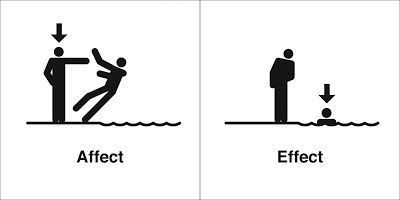
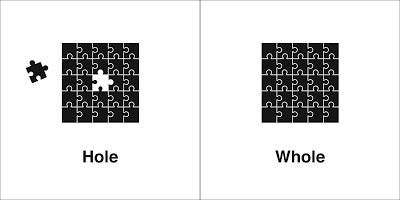
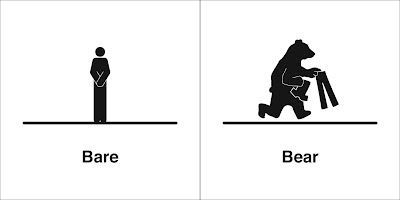
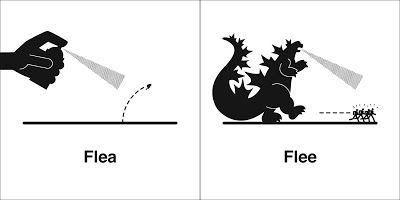
IF IT HAS BEEN A VERY LONG DAY, YOU ARE ‘WEARY’. IF SOMEONE IS ACTING IN A WAY THAT MAKES YOU SUSPICIOUS, YOU ARE ‘WARY’.
ALL IN ‘DUE’ TIME, NOT ‘DO’ TIME
‘PER SE’ NOT ‘PER SAY’
THANK YOU
BREATHE – THE VERB FORM IN PRESENT TENSE
BREATH – THE NOUN FORM
THEY ARE NOT INTERCHANGEABLE
WANDER – TO WALK ABOUT AIMLESSLY
WONDER – TO THINK OF IN A DREAMLIKE AND/OR WISTFUL MANNER
THEY ARE NOT INTERCHANGEABLE (but one’s mind can wander)
DEFIANT – RESISTANT DEFINITE – CERTAIN
WANTON – DELIBERATE AND UNPROVOKED ACTION (ALSO AN ARCHAIC TERM FOR A PROMISCUOUS WOMAN)
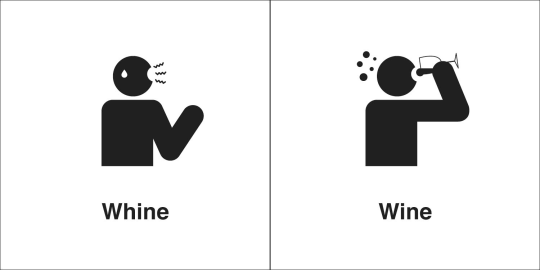
WONTON – IT’S A DUMPLING THAT’S ALL IT IS IT’S A FUCKING DUMPLING
BAWL- TO SOB/CRY
BALL- A FUCKING BALL
YOU CANNOT “BALL” YOUR EYES OUT
AND FOR FUCK’S SAKE, IT’S NOT “SIKE”; IT’S “PSYCH”. AS IN “I PSYCHED YOU OUT”; BECAUSE YOU MOMENTARILY MADE SOMEONE BELIEVE SOMETHING THAT WASN’T TRUE.
THANK YOU.
*slams reblog*
IT’S ‘MIGHT AS WELL’. ‘MIND AS WELL’ DOES NOT MAKE GRAMMATICAL SENSE.
i think it’s a shame that so many people speak perfect english just from the internet/tv and get no real recognition for it. there’s this horrible assumption that being fluent in english is just a given (propaganda from americans in cargo shorts i believe) and english is brushed off as an “easy” language. that isn’t the case at all and if you’ve learned english that’s amazing and im honestly in awe. i hate that people achieve so much to reach the minimum expectation, and then english speakers will pat themselves on the back for being able to count to 10 in french
It’s always sad to see things like “Sorry for my bad English, it’s my second language” because 9 times out of 10 there’s not even anything wrong with their English. If you can get your point across, I don’t think most people will judge you for a few mistakes here and there. You know two (or more!) languages, and anyone rude enough to mock you for imperfections probably doesn’t.
one of the weirdest ways that language is evolving in response to the internet is that “bad words” just. do not have the same impact anymore. i constantly forget that some people think ‘fuck you’ is a terrible insult
so threats and insults have to start getting really out there if the person wants to even mean anything. if a person told me to die i’d shrug it off but if i opened a post’s tags and saw “op i will sneak into your house and replace all your shoelaces with cooked pasta” do you know how shaken i’d be? do you know how upset i’d be if i saw “op is the personification of the look you share w other people in the grocery store when some dude is causing A Scene™
for no reason”
So you are saying English curses on the Internet are becoming more like Yiddish curses?
I sincerely hope so but I can’t say I’m familiar with yiddish curses and i am begging you to tell me a few
22. Farshporn zol er oyf(tsu)shteyn? Why bother getting up alive?
26. Got zol im bentshn mit dray mentshn: eyner zol im haltn, der tsveyter zol im shpaltn un der driter zol im ba’haltn. God should bless him with three people: one should grab him, the second should stab him and the third should hide him.
29. Agroys gesheft zol er hobn mit shroyre: vus er hot, zol men bay im nit fregn, un vos men fregt zol er nisht hobn. He should have a large store, and whatever people ask for he shouldn’t have, and what he does have shouldn’t be requested.
34. Migulgl zol er vern in a henglayhter, by tog zol er hengen, un bay nakht zol er brenen. He should be transformed into a chandelier, to hang by day and to burn by night.
38. Heng dikh oyf a tsikershtrikl vestu hobn a zisn toyt. Hang yourself with a sugar rope and you’ll have a sweet death.
oh my god these are phenomenal I’m absolutely giving that link a read when i get the chance
what tumblr thinks evolution of language is: pushing words to have another meaning despite the mass majority of people disagreeing and finding it more difficult than current words.
what evolution of language actually is: referencing lines from a vine brings upon it’s own meaning now, and many people accept these references and find them enjoyable to use in every day life
One of the worst things about being southern is that my vernacular has been co-opted by overly-radical social justice types. Every time I say “y’all” or “folks” I hear them, not me, and I fucking hate it.
same
Damn
I saw a post that said white people cant say ya’ll because its “appropriation of black culture ”
Hell nah
I’m white and one time this black kid that I work with was like “why do you say ‘y’all’ even though you’re white?”
And I was like Uhh….”I’m southern and kinda country.” I didn’t have the time to get into the fact that much of what is now considered “urban” slang has been used in the rural south by both black and white people (and anyone else who spent enough time there to pick it up) for a couple hundred years at least, and the history of the First and Second Great Migrations.




 PiraticOctopus