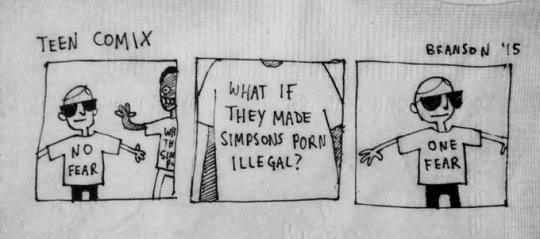
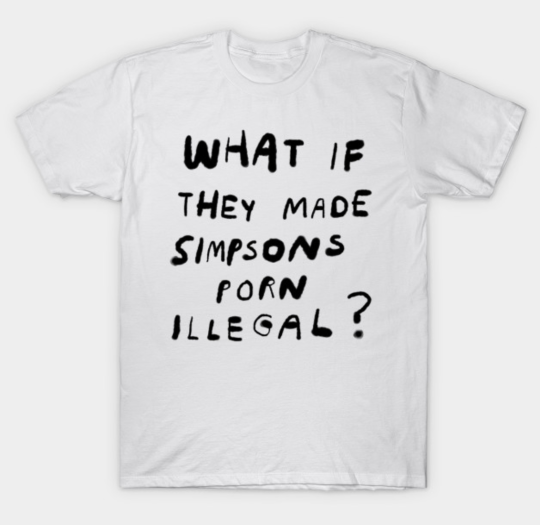
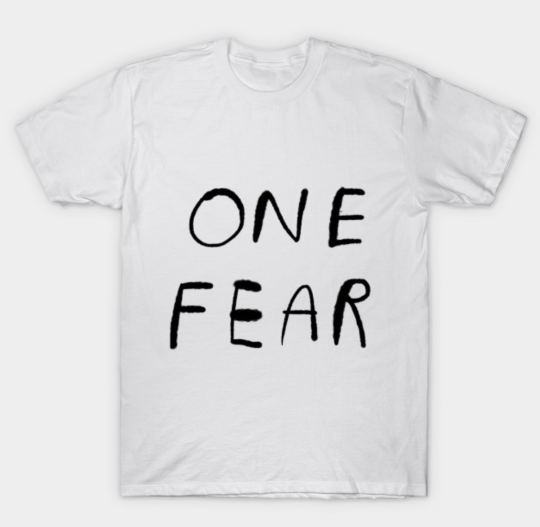
I’ve gone and done it. I’ve monetized my comic that everybody used to rip off. Buy these shirts and you’ll not only become an instant fashion icon, but you’ll also be supporting me, an insanely hot artist.
Vulgar is a conlang (constructed/fictional language) generator created to help literally generate a language for you. No, really. No tricks, and it’s super simple to use. It’s my favourite tool right now for writing fantasy, even as someone who loves creating his own languages, it’s an amazing starting point.
Want a random conlang, straight away, with no prep or fuss? Just visit http://vulgarlang.com/index.html and click “Generate New Conlang”… and that’s it. Scroll down and through your brand new, generated, completely original conlang.
If you’re a little more advanced in terms of conlanging and want to specify IP phonemes to be used, you can add them too, but even with no knowledge of linguistics you can create a language at the click of your fingers.
This version of Vulgar is completely free, sure…. but! the guy who created it has not only made an amazing thing (which I repeat, is absolutely free at it’s most basic point), but is also planning on updating it more and more!
Under the “Buy” tab on the Vulgar website, he links to his email, where you can offer to pay for the full version of Vulgar, which is a total steal right now at a sale price of only nineteen dollars. Considering professional conlangers and linguists could charge you, like, a metric fuck ton of money for the same data you’re getting here for just nineteen, that’s a major steal.
Not to mention, buying the alpha build now gives you free access to all of it’s updated versions, which I can guarantee are just going to get better and better! I’ve already bought it and I adore it, and this is a tool the likes of which we in the conlang community have never seen in such an awesome way.
Please consider helping Vulgar out, because the creator is a damn genius
Hey folk, Coursera has a great line-up of animal-related courses that are starting in April. They’re all free and absolutely worth doing. You can choose to pay like $50 USD for a certificate, but you can take the class without it. And! You don’t have to do the assignments to have access to the information, so if you’re just looking to learn and not have resume items, you can join and then basically just audit the course.
Dog Cognition and Behavior, by the well-known professor Brian Hare, started yesterday (4/10) but there’s no penalty for joining a day late.
The Truth About Cats and Dogs, out of the University of Edinburgh, starts on (4/17). I haven’t taken this one, but I’ve been pleased with the level of animal science content coming out of other courses from that institution.
There’s a whole bunch of great paleobiology courses out of the University of Alberta, and I recommend them – with a caveat. The guy they let do the lectures for some of the units is kinda hard to stay engaged with, but they do have transcripts you can read instead. Here’s those three:
They’ve made a text version of that handy video with the cute graphics:
If In Doubt, Add Some Space
Your
puppy doesn’t have to be right in the middle of something to have a
positive socialisation experience. If you’re ever worried that a
situation may be too much for your puppy, move further away and give
them a chance to acclimatise.
A
good example of this is socialising puppies to traffic. For many dogs,
standing right next to a busy road with all the large, noisy cars can be
very frightening. Avoid busy roads at first, starting somewhere like a
park where you can walk along away from the road. As your puppy’s
confidence improves, you can try coming closer and closer
What Should I Socialise To?
There are six main categories of things that you should socialise your puppy to:
This looks like a really good intro, but it doesn’t touch on a couple of important things, so I’ll add them.
Small amounts of very positive socialization are much better for dogs than lots of marginal experiences. It’s tempting to try to expose your puppy to every possible thing as fast as you can, but that risks setting them up for unpleasant experiences, situations you can’t control, or just straight up overloading them. Pick a couple things and do them right. This is especially crucial for dog-dog socialization when you’ve got a breed that is genetically prone to reactivity or aggression because all of their experiences absolutely have to be positive ones. @molosseraptor has some great posts on picking the right dogs to socialize your pup with.
Fear periods change socialization rules. Dogs have two fear periods – one predictably at 8-10 weeks and one later in adolescence, somewhere after about six months of age. These periods are when dogs would be gaining independence and it becomes super important for survival to learn what is dangerous and what isn’t. During these periods dogs are prone to single-event learning, which means you have to be really careful not to set your dogs up for bad experiences because they might shape their behavior for the rest of their lives. Fear periods are a good time to back off on active socialization attempts and work on keeping your puppy happy and comfortably engaged with things it is already used to. (Here’s a link to a great article on fear periods).
You’re an artist having a wonderful day posting your art to Tumblr dot com. You don’t always get a ton of attention, but that’s okay. But then one day somebody reblogs one of your posts…
You’re super excited! Someone appreciates your hard work. Then you see the profile picture, and it’s something like this…
[Screenshot of a Tumblr notification that shows an icon that looks suspiciously like a white girl in a bikini showing off her butt, though it’s so small it’s hard to tell. “axpgthglewut reblogged your photo.”]
You’re suspicious at this point, but mildly optimistic. Maybe someone likes both T&A and your Steven Universe fan art. Then you go to their blog and…
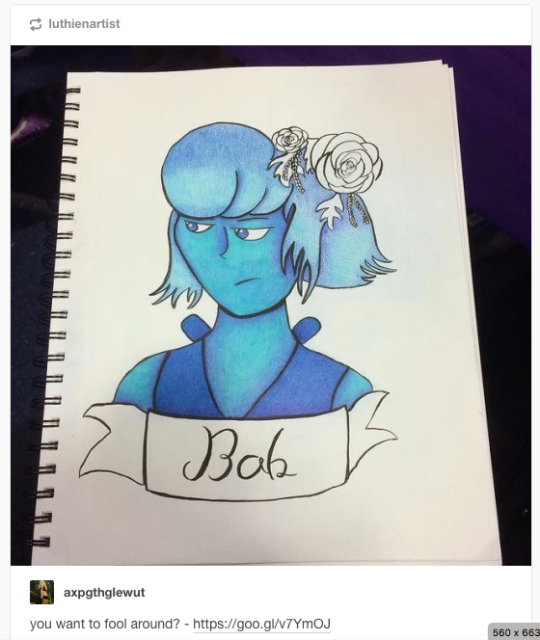
[Screenshot of my drawing of Lapis Lazuli. My original description was replaced with the text “you want to fool around?” and a link that leads to God knows where.]
It’s happened. Again. For some bizarre reason a p/orn bot is using your completely safe for work art to get click throughs to something that’s definetly not safe for work.
You desperately want at least your attribution back, but since Tumblr is so horrifically set up you’re very sure there’s no way to do that.
Except you can!
Tumblr allows you to report copyright violations which includes removing your description and injecting their own link. But how to do this?
Step 1: Report them
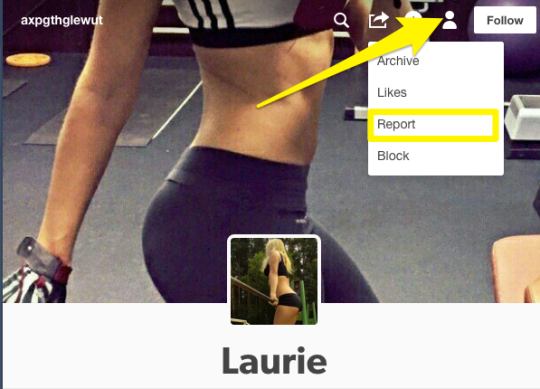
Go to that human icon, click it to go to the drop down, and select “Report”.
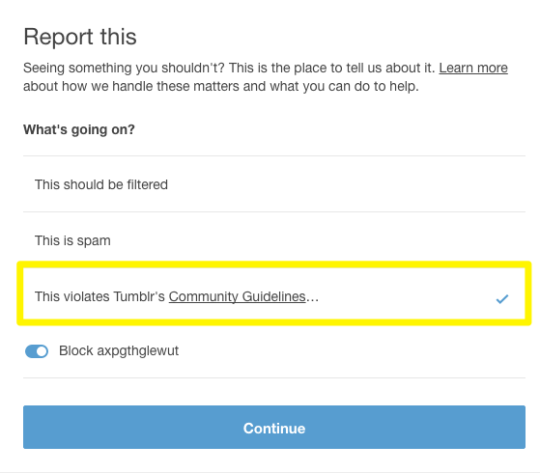
Step 2: Select “Community Violation”
This behavior is explicitly against the Tumblr terms of service so that’s where it goes.
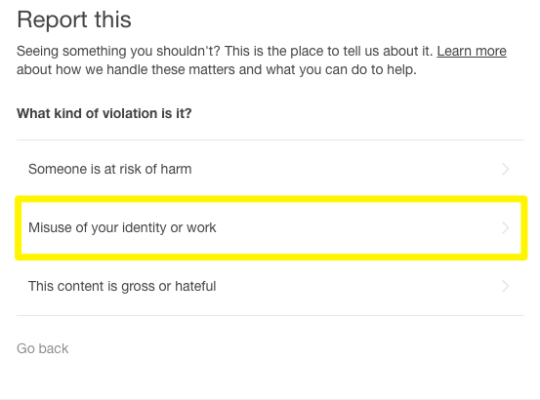
Step 3: Select “Misuse of your identity or work”
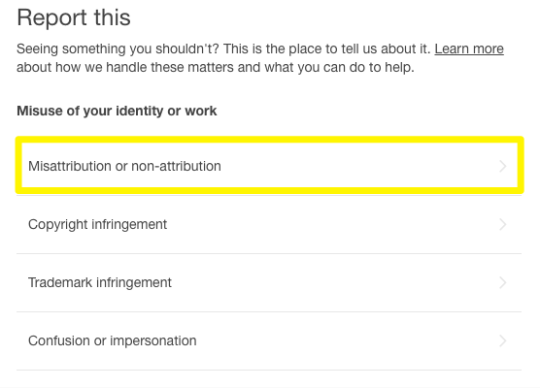
Step 4: Select “Misattribution or non-attribution”
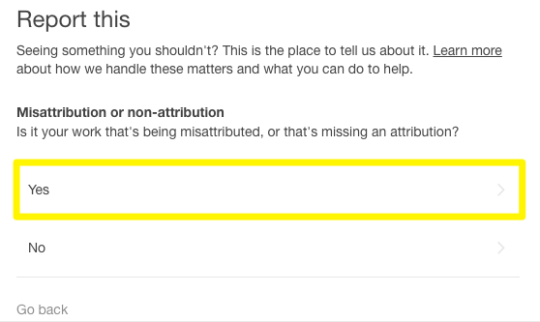
Step 5: Select “yes”, this is your work that’s being misattributed.
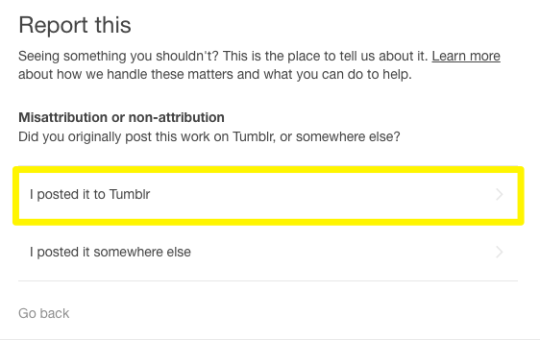
Step 6: Select “yes”, you posted it to Tumblr.
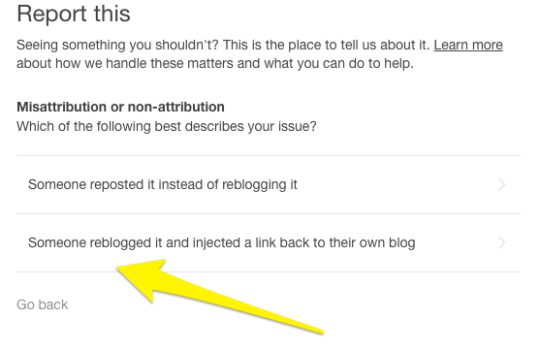
Step 7: Select “Someone reblogged it and injected a link to their own blog.”
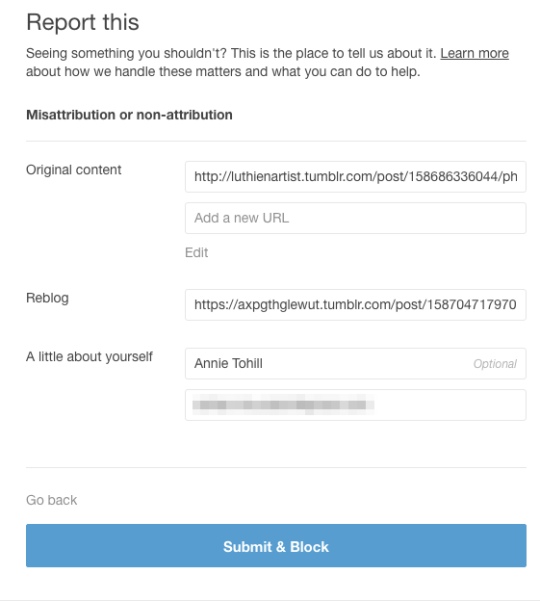
Step 8: Put in the link to your original post, the link to their reblog, and your email. Then submit!
You can get it the link to the reblog without going to their blog directly by going to the dash view of the blog, hovering over the top right corner, right clicking and selecting “copy link address.
While all of us here on this trash website enjoy picking on staff, in my experience they take care of this kind of thing relatively quickly (usually 2-3 days).
I hope this has helped at least some of you, and remember: only you can stop bot reblogs. [insert gif of Smokey the Bear here]
i don’t really have any specific reference places but here’s some things i do.
drawing birds is arguably one of the hardest animals because of their feathers. unlike fat and fur that folds to the body in a way that’s usually readable to whats underneath, feathers sort of create a ‘bubble’ around the body which makes a lot of body parts indistinguishable to where one ends and another begins. so its important to always think in terms of skeletal anatomy:
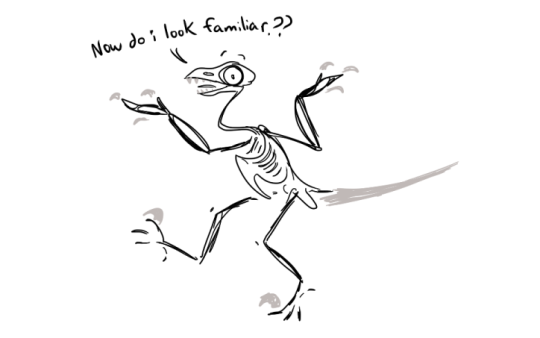
birds are dinosaurs and therefore reptiles. looking at birds this way, it’s a lot easier to see their evolution.
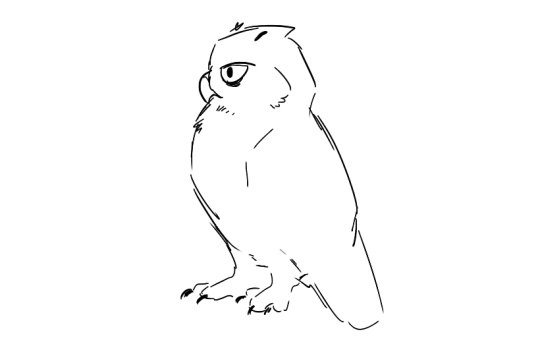
with that in mind, say we wanna draw this dude. owls are pretty tough because their outward appearances are so deceiving.
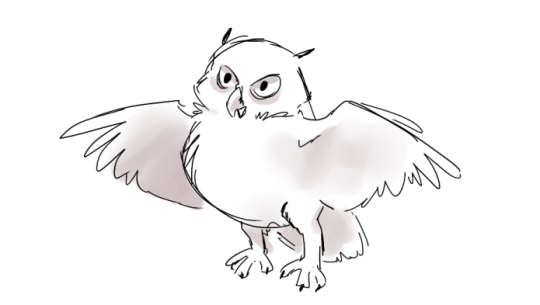
we’ve got a neutral pose, feathers are generously surrounding most of the body so its no sweat, we don’t really know whats going on. but we can hide it. but now we want to make him move and look cool. without really knowing whats going on we might get stuck on something like this:
its always kind of stiff and frustratingly unrealistic. mostly this is because we just don’t have enough knowledge of the skeletal structure to work with. eyeballing anatomy on our first drawing might get something like the left, more than anything people aren’t generous enough with leginess of birds:
owls do indeed have regular proportioned necks with the rest of their bodies. and their skulls are like that of any other stereotypical raptor under their mask of feathers (minus their freaky eye sockets and ears)) they can open their mouths wide just like a hawk or eagle can. it’s important to remember that birds with large wingspans do not magically lose their length when hidden. they are just conveniently folded in against their bodies.
knowing this we can try again. suddenly things seem to click in place more and have a believable-ness to them.
the rule of thumb for most birds is they have less body mass and more leg/neck than one thinks. they are lanky dinosaurs.
when we are looking at this:
we are seeing this:
with that rule, drawing birds becomes a lot less confusing. with practice you might just eyeball their feathered appearances but if not, going back to skeletal/muscle structure gives the base you need to draw convincing birds.
when it comes to specific body parts, the most challenging part for me personally have always been feet. birds with super twiggy feet are easier because one line per toe is easy to get away with. but when you get to birds with meatier feet, especially raptors, it gets difficult. my way of getting around this is to think of the actual ‘feet’ last. drawing each separate toe first gets confusing because you just find yourself trying to get them to each fit evenly together at the base of the foot. one always seems kind of skinnier or fatter than the others in my experiences, and by the time you correct it the gesture gets muddled and lost.
so i just skip that part until later, i draw talon first.
perhaps this is very unorthodox, but just like artists might square in the hands first on a human before working out the arms, i square in the talons to know where i want them before worrying how they go on exactly.
that way we have a clear gesture captured, and in my experience it is much more readable.
thats’ really all i can think of now in terms of my techniques, i hope this helps :V






 PiraticOctopus