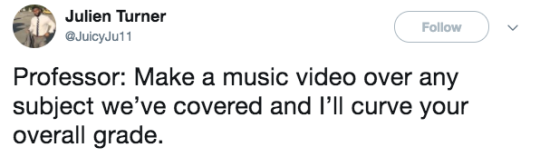
lads i was really just going about my life today and i came into my genetics lecture and my professor put both hands on the podium and explained to our suddenly silent 200+ person lecture hall that a chinese scientist has just created the world’s first GMO babies by taking human embryos and modifying them to be resistant to HIV. there are two of them and they’re twins. apparently we don’t know yet if it’s successful but it was at a conference where a ton of GMO researchers were discussing if genetic modification of humans should be allowed and if so to what extent and apparently this dude got the microphone and said ‘ive already done it’ and showed some data (apparently not a lot though) and there’s a ton of drama happening right now because ‘what the FUCK do you MEAN you already did it????? what the FUCK dude?????’. my professor kept saying to us with complete sincerity ‘this is important, this is really, really important’ and anyway i just…….what a time to be alive, you know?
like i dont feel comfortable taking a stance on any of this without more information but i do know for certain that god, i wish i could have witnessed that room of GMO researchers when this dude got the mic and was really like ‘i have modified human embryos’
Hey! I’m a scientist who works with gene editing and can def give you more context on the gmo babies! tldr it’s unethical and Not Great, but basically there’s been an (unenforceable) international moratorium on gene editing humans since 2015. It’s maybe illegal, maybe just advised against in China. The university, hospital, and government are all denying knowledge of it tho, which makes this super shady. (1/?)
Here’s the thing: gene editing has been used in therapy in humans, but 1. patients give full consent and 2. cells are removed from the body, CHECKED, double-checked, then put back in, because gene editing can have off-target effects and we want to avoid those, and 3. only cells that can’t be inherited are edited, so that an individual is only giving consent to alter their own body, not their children and/or the general gene population. NONE OF THOSE THREE HAPPENED IN THIS CASE. (2/?)
It’s extremely unclear if the parents knew what was happening, other than that the dad was HIV+ and the research was supposed to prevent the kids from getting HIV. (There are a LOT of cheaper and more accessible ways to do this than gene editing). So far, the scientist hasn’t proven that he checked for (or prevented) off target effects – but we do know one of the kids is a mosaic, meaning only SOME of her cells were altered. This could be really bad for her health, we literally don’t know (3/?)
This guy waited until he had produced human beings to make his announcement, didn’t consult the public, other scientists, or regulatory boards, and sprung the announcement RIGHT before the human gene editing conference – which signals that he did this for his own sake, not for science. He’s set a dangerous precedent and potentially damaged the public perception of gene editing, not to mention endangering those children (the edit made them more susceptible to West Nile). So. Fuck that guy. (4/4)
……👀
this is…quite literally the wildest shit like i understand the incredible temptation to try something just to see if it could be done, every scientist understands that, but holy shit dude what the fuck?
idk this has a LOT happening and im not gonna be able to address all of it but my thoughts right off the bat: current gene editing (see: modifying someone’s existing genome. different from this case because in gene editing, the person is born and is displaying symptoms of a genetic disease, where here the embryos are being modified before birth) is pretty life changing and very safe and effective from my understanding of it and what i’ve been taught, and it makes me angrier knowing that this might set back that kind of science that’s more ethical in terms of consent. i also don’t like that the lives of these kids are gonna be inherently controversial. i also don’t like……………uh…..almost all of this, actually. like this is A Lot, holy shit.
morning reblog of this, this time with some more sources that basically echo what @sunsetsovercitylights said; this shit was super shady, medically unnecessary, and dubiously consensual.
also, i recommend reading the comments on this post; there are also lots of scientists and grad students saying shit along the lines of ‘everyone in my department is pissed that he dared do this for literally 143093581 reasons’, which seems to be the general response of the scientific community so far. this is important…..but it’s also appalling.
Carbon dioxide has only one atom more than carbon monoxide just in case you think breathing is harmless
SOMEONE hasn’t studied organic chemistry.
A single methyl group can make a hell of a difference in how something is processed by your body. Well, that and dosage- when you take Adderall by prescription, the dosages are much lower than your average recreational dose of crystal meth. I’d worry more if there was sufficient evidence it turned into methamphetamine in the body (which there isn’t).
See also: cholesterol and the steroid hormones such as estrogen, testosterone, progesterone, cortisol, etc. , which have very different effects on your body even though the main molecular backbone is the same.
Aquatic plants buried underground for more than a century can be revived and regrown, according to a new study investigating the phenomenon of ‘ghost ponds’ – ponds that aren’t properly drained but filled in with soil and vegetation under agricultural land.
Restoring some of these buried ponds, and the habitats hidden in limbo beneath the soil, could be a valuable way of reversing habitat and biodiversity losses, say researchers, and we could even bring some plant species back from the dead.
The team from University College London in the UK has dug out three ghost ponds so far and estimates there could be as many as 600,000 similar patches spread out across the English countryside.
“We have shown that ghost ponds can be resurrected, and remarkably wetland plants lost for centuries can be brought back to life from preserved seeds,” says lead researcher Emily Alderton.
i wonder how it’d work for naturally filled wetlands – the shallower glacial ponds and lakes around here just fill themselves over time. i wonder if you could dredge down through a few centuries of dead leaves and sediment to find living roots.
Behold the magic of compaction dynamics. Scientists from Mexico and
Spain dumped 25,000 tiny dice (0.2 inches) into a large clear plastic
cylinder and rotated the cylinder back and forth once a second. The dice
arranged themselves into rows of concentric circles. See the paper and the videos here.
Remember this the next time you want to complain about GMO’s, we may not have done it in a lab but they still are that.
Bananas looked like lemons wtf
Isn’t this more of a combination of selective breeding and GMOs? Not just GMOs?
Yes. But people talk about how GMO’s are “unnatural”, yet for centuries humanity has been exploiting mutations in animals and plants to produce food for themselves.
GMO’s are simply the process of inducing these mutations reliably.
People hear “Lettuce being modified with scorpion DNA” and think that we’re now eating scorpions. But, in reality, they’re taking a tiny bit of scorpion DNA and splicing it into the plant. Why? So the plant will produce poison that is not harmful to humans but will deter insects, reducing the use of pesticide, which CAN be harmful to humans and the environment.
GMOs are producing rice that can survive flooding, which makes rice more reliable yields and will prevent food shortages in poor nations that rely on said crops for staple food.
GMOs are also creating spider-goat hybrids. Why? So we can splice web production into the goat’s udders. We’ll be able to spin huge quantities of spider silk, enough to reliably create spider silk cables and ropes, which have more tensile strength than steel.
I for one am glad I live in a time where watermelons aren’t giant tomato abominations
The issue with GMOs is that corporations like Monsanto are patenting GMOs and arresting indigenous farmers for cross pollinating with they seeds. But there is nothing dangerous about the science.
^This.
The problem isn’t the science, it’s what capitalism does with that science.
i hate when scientists are like ‘this planet cant have aliens on it because there’s no water! the atmosphere is wrong! theres not enough heat to sustain life!’ because dude theyre aliens, nobodys saying they need any of those things to exist
we’re so humanocentric it’s infuriating. just because we can’t live there doesn’t mean nothing can! like, never mind aliens, we do this with our own fucking planet! scientists used to think nothing could possibly live at the bottom of the oceans, because “all life needs sunlight to survive, of course!” yet what did we find when we invented submarines that could go deep enough? the barren wasteland the scientists were expecting? fuck no! the bottom of the sea is teeming with all sorts of weird and wonderful creatures even wackier than anything they ever came up with in star trek!
when we discover aliens, we probably won’t even fucking realise it, because they’ll be so different from what we’re used to as ‘life’, we won’t even recognise them as living beings
things are heating up in the alien fandom
Another thing that bothers me is when scientists stumble upon a huge black hole or something and say shit like “it’s impossible, it shouldn’t exist, it breaks the laws of physics”…Buddy, do you know who made the laws of physics? HUMANS. HUMANS WHO HAVE NEVER EVEN LEFT THE SOLAR SYSTEM. It isn’t “breaking” anything. Maybe instead of saying it’s impossible to exist, you should look at these old laws from a different perspective. Science is an ever-changing field that’s full of discovery, but sometimes scientists are SO STUBBORN! I understand not wanting to have to rethink years of research but COME ON.
The problem with this discussion is that it’s based on false premises, i.e. that scientists are conservative people who view physics laws as religion and anything contradicting them as heresy. That’s a popular view often shown in fiction and in the popular press, and tends to make non-scientists feel good about themselves (”I may not know as much as them, but at least I’m not as close-minded”). It’s also a very inaccurate and insulting view of scientists.
While one can never generalise things across an entire group of people, and there are indeed scientists out there who are somewhat ossified (and in the end of the 19th century, it’s true that the science field in general was rather calcified. The public has just failed to notice scientists have moved on from this point of view), the vast majority are extremely forward-thinking and would like nothing better than being proven wrong in some cases. Science advances as much through its failures as through its successes, and it’s in fact the very basis of the scientific method to be ready to expose oneself to being proven wrong (that’s the meaning of having falsifiable theories: a theory is scientific only if it contains the seeds of its own potential destruction). When a scientist sees something incompatible with their previous knowledge, they don’t exclaim “that’s impossible!” but “that’s curious…”. Cracks in current theories are usually where new knowledge is hidden, so scientists actually actively look for them.
What the general audience mistakes as conservatism is actually a combination of traits that are vital for scientists to be able to do actual scientific work:
The threshold of proof is very high in science. Humans can easily be misled, our brains are specialists in fooling themselves, anecdote is not data, so don’t expect a scientist to take your tall tale at face value. To be worthy of scientific examination, a phenomenon must be repeatable, independent from the observer, and if possible noticeable in controlled conditions. While it’s true that some discoveries (like some animal species) have started as hearsay, a typical scientist will need more before they go on a wild goose chase for the Yeti;
Our current scientific theories (with “theory” used in its scientific meaning, which is “a
well-substantiated explanation of some aspect of the natural world that is acquired through the scientific method and repeatedly tested and confirmed through observation and experimentation”, i.e. quite the opposite of a hunch or hypothesis) are extremely successful and have large amounts of data backing them up. This is especially true of General Relativity, Quantum Field Theory, and the Theory of Evolution by Natural Selection. These theories have been repeatedly tested and found correct, sometimes down to 10 figures or more after the decimal, both through observation and experimentation. If you want to claim that one of these theories is wrong, the quality of the evidence you are going to have to give will have to match the quality of the evidence in favour of these theories. And if the only evidence against them is your misguided ideas about how the world should be, whether due to religious belief or plain ignorance, don’t expect scientists to have a lot of patience listening to you;
While scientists value imagination, they are careful with trying to extrapolate too far from what is already known, and wild speculation is frowned upon, as it’s far too easy to fool oneself into expecting things that won’t happen. Scientific research is like walking in the dark: you make small steps and try to feel your way around. You don’t make long jumps and hope not to hit a wall or fall into a hole. Unless you have good reason, based on previous knowledge (like moving in an area you already know), to know that the direction you’re going is the right one.
So to take again the examples shown by the previous rebloggers, a scientist will never say: “this planet cant have aliens on it because there’s no water! the atmosphere is wrong! theres not enough heat to sustain life!“. At most, they will say: “This planet cannot support life as we know it (i.e. carbon-based water-dependent life)“, and that’s a perfectly correct statement. Could it support other types of life? Who knows? So far, we haven’t observed any other type of life, so it’s impossible to actually answer the question without a fair amount of speculation, and as I wrote, scientists prefer to leave speculation to others.
As for the “it’s impossible, it shouldn’t exist, it breaks the laws of physics“, it’s actually laughable that anyone could think a scientist would ever say that! Maybe in a bad Hollywood movie, but in real life? In real life, cosmologists and particle physicists are actually eager to observe stuff that cannot be explained by their current theories. General Relativity and Quantum Field Theory (and in particular the Standard Model) are extremely successful, but also desperately incomplete (and in the case of the Standard Model, rather inelegant), and actually completely incompatible with each other. Which is a shame, as some of the things we’d like to know depend on having a theory to bridge the two. That’s why scientists are eager to discover something that cannot appropriately be explained by these two theories. Such a crack, as I wrote above, would provide hints as to a better way to describe the universe.
So stop propagating this false image of the scientist as a kind of high priest that thinks they hold the truth in their hands and shout down any kind of alternative as heresy. That’s not how scientists are, that’s not how science works, and it reflects more on your own lack of understanding of science than on any imaginary scientist’s failings.
This
Also, scientists are very much aware that life can exist beyond our planet. There’s an entire field of study about that very concept–Astrobiology. Panspermia, one of the biggest scientific theories explaining life on earth *entirely* hinges on life existing beyond earth. Scientists saying something isn’t fully substantiated by scientific study is not the same as scientists saying something is impossible and screw anyone saying otherwise
New Scientist- good headline, explains exactly what was found, doesn’t sensationalize Cosmos- ok headline- “bizarre” kinda clickbaity, but hey, it IS bizarre- it’s got this really neat symbiotic sulfur-eating bacteria that lives in its gills and a tiny digestive system- and yes, it was found in the Philippines Popular Science:
If you’re a science writer, then act like it. Calling a harmless shipworm a “horrifying nightmare monster” is irresponsible. It’s not a monster, it’s just a worm. And it’s not a new species, either. Linnaeus described the thing in 1735. It’s just that this was the first live specimen ever found.
Science faces enough challenges in communication. One of the biggest problems is that scientific writing is often inaccessible and jargony to people who don’t know the specific lingo. Popular science writing online can help to change that, but not through clickbait and not through trying to gross people out. Don’t scare people away from embracing discovery for clicks on Facebook.