I think they’re more ethical than the other option – allowing invasive predators to be consistently exposed to a myriad of dangers that shorten their life expectancy in brutal ways while they kill native wildlife for the funzies.
We have the skills and the knowledge to provide a completely stimulating, positive welfare environment for indoor cats with a little dedication. They don’t feel ‘deprived’ if we actually put in the effort. Cats raised indoors have no problems with it. There are some cats who won’t transition well to not being allowed to go outside anymore, but that can be alleviated through screened porches, cat windows, or leash training – again, they just require human effort.
NO ASPECT OF YOUR IDENTITY MAKES YOU INCAPABLE OF BEING BIGOTED
not your race, religion, sexual orientation, economic class, gender, or any other part of your identity absolves you of your personal responsibility to treat others with respect
It’s 2015. If doctors don’t know how to operate on fat bodies. Then they shouldn’t be doctors. We have enough resources an equipment to deal with “obese” patients. There is no need for the medical community to continue fat shaming.
Let’s talk a little bit more in depth about how obesity affects surgical procedures.
In most serious, intensive surgeries, you’re probably going to be under anesthesia, right? And you’re probably going to have medications to take afterwards. Stuff like this filtered through the kidneys and liver.
Obese patients have much higher rates of renal hypertension, which affects the kidneys, and morbidly obese patients have a 90% likelihood of having abnormalities in their liver.
That all adds up to a really bad time, and drugs being filtered out of the system quicker and therefore not working as intended. And you really want your anesthesia to work right when people are cutting into you.
In addition to this, some weight-based drugs are affected by fatty tissue, and some are not, so this can cause problems in determining the proper dosage.
Obese patients are at a higher risk for deep-vein thrombosis – this is when a blood clot forms in a deep vein, like in the leg. Surgery is recognized as a risk factor for DVT, and so obese patients undergoing surgery are doubly at risk.
Finding veins in the patient is also made difficult – it’s the difference between finding the edge piece in a 1000 piece puzzle, vs finding it in a 100 piece puzzle.
It’s harder to monitor blood pressure in obese patients as well, as standard cuffs may not work due to there being too much fatty tissue between the blood vessel and the cuff.
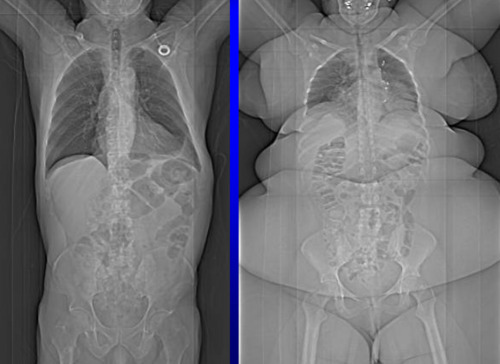
When you’re performing surgery, you have to pull back the flesh and muscle to get to where you’re trying to operate on – the more you have to pull back, the more difficult this becomes.
This image shows how much more you’re having to work through when doing an operation on an obese person:
So no, it’s not a matter of doctors being bad at their job. Surgery by itself is a difficult and risk-laden process – adding obesity on top of that adds an uneccessary layer of additional risk and complexity.
Sources:
Palmer M, Schaffner F. Effect of weight reduction on hepatic abnormalities in overweight patients. Gastroenterology 1990; 99: 1408–13.
Albert S, Borovicka J, Thurnheer M, et al. Pre- and post-operative transaminase changes within the scope of gastric banding in morbid obesity. Schweiz Rundsch Med Prax 2001; 90: 1459–64.
Ramsey-Stewart G. Hepatic steatosis and morbid obesity. Obes Surg 1993; 3: 157–9.
Clain DJ, Lefkowitch JH. Fatty liver disease in morbid obesity. Gastroenterol Clin North Am 1987; 16: 239–52.
Marik P, Varon J. The obese patient in the ICU. Chest 1998; 113: 492–8.
Ribstein J, duCailar G, Mimran A. Combined renal effects of overweight and hypertension. Hypertension 1995; 26: 610–5.
Braekkan SK, Siegerink B, Lijfering WM, Hansen JB, Cannegieter SC, Rosendaal FR. Role of obesity in the etiology of deep vein thrombosis and pulmonary embolism: current epidemiological insights. Semin Thromb Hemost 2013
Allman-Farinelli MA. Obesity and venous thrombosis: a review. Semin Thromb Hemost 2011; 37:903-7.
This is very true. When I had open heart surgery, there were various complications as well as problems with the anesthesia because of how fat I was. Thanks be to God my surgeon was top notch. But the fact of the matter is that if I was a thinner patient, the surgery would have been far less traumatic. In fact, if I had not put on so much weight, my aortic valve would have lasted me longer. So, yeah, biological and scientific realities are at stake when you carry too much weight.
I have seen some communities on tumblr try to push a “body positive” self esteem agenda by dismissing health risks of obesity as fat bias.
Yes. You can be beautiful no matter what your body looks like.
No. You cannot always be healthy regardless of what your body looks like, and while self confidence is important, taking care of yourself and addressing health problems-including being overweight- is important.
Thanks for someone being honest and real about the risks of obesity and the medical field
being a minor doesn’t give you the license to say whatever the hell you want without repercussions on here. either you want to be treated like a child in all areas (which i doubt you want because you won’t be taken seriously whilst being “protected”) or you want to be treated like an adult. you can’t have it both ways. if you say something factually incorrect, people will tell you you’re wrong. if you’re being a bigot, people will react to that. yeah, people can go overboard when they’re older and replying to minors on this website, and that’s shitty, but replying in a measured and informative manner doesn’t constitute harrassment.
This is really ridiculous bc op obviously agreed with your point but then revoked it because of the labels you have? Like? Jesus have some backbone and actually stand by your views even if they’re shared by people you disagree with
^^^ This.
I think it’s super important to acknowledge and embrace the fact that people who you might dislike or disagree with overall, can hold specific views that you like or agree with and want to advance / promote.
I think being open to this possibility is really important for influencing people positively and bringing about positive change in the world, because it’s one of the most powerful ways to draw out and encourage positive qualities in people. Like if a person spouts negative or bigoted viewpoints 90% of the time but 10% of the time they say reasonable / respectful things, if a lot of people start engaging more with the positive / good things they’re saying or doing, I think it encourages them to do more of those things, and it helps shape their actions and personality and values in a positive direction.
I think the practice of cutting people off totally, and dismissing anything and everything they have to say, because you disagree with them on some other point, is a dangerous form of all-or-nothing thinking which tends to isolate people and push them to become more extreme in their views…and it tends to separate groups and polarize them into us-vs-them mentalities.
I don’t want to have any part in this.
There are times when I unfollow people. Like if I feel like someone is posting a sufficient amount of negative stuff that I don’t want to see, I unfollow them. But I really don’t like the idea of policing people’s reblogs, and I have never done anything like in the ask above, and I would encourage others to refrain from this behavior. I see unfollowing not as a way to isolate people too, so much as a way to protect myself.
I follow many people who express the occasional viewpoint that I disagree with. I think this is good, I think it enriches my life.
If anything, the one attitude that I am most likely to unfollow someone for, is an all-or-nothing approach to things, regardless of whether they’re pro- or anti- an issue that I agree with!
Scientist discovered the lioness/lion, called Mmamoriri, on the plains of the Okavango Delta in Botswana, southern Africa. They believe evolution is helping the lionesses there grow manes so they fool invading prides into thinking they are males – helping their survival. Mmamoriri in particular not only has a mane but also a deeper and more masculine roar. If that’s enough to scare off other prides trying to invade her family’s territory, it will be a big genetic advantage – helping her pride’s cubs survive.
The scientists believe there are five other lions in the area with the same evolutionary adaptation, meaning they have higher male hormone levels.
While children are taught to believe all animals are either male or female and all are straight, the natural characteristics shared by LGBTIs in the human world are widespread beyond our species. Other examples include male deer which don’t grow antlers and are therefore able to ‘sneakily’ breed with females while the other males are fighting for access to the does.
Mmamoriri is one of the stars of the new documentary, The World’s Sneakiest Animals, which will be shown in Britain on BBC2 at 6.30pm on Christmas Day. The show, presented by Chris Packham, also shows cuttlefish that can change their color and skin texture to disguise themselves and the Californian Ground Squirrel, that rubs itself with the skin of rattlesnakes, its main predators, so they can’t sniff it out.
I wouldn’t call this “gender fluid”, though, that implies they can go back and forth (like some species of fish). This animal is probably intersex, has the feline equivalent of PCOS if it exists, or is a freemartin, phenomena that have been documented in other species of cats (including housecats). Not only a differing brain map but awareness of the self as an entity is actually required to be transgender- and the recognizing of self is pretty much limited to primates and cetaceans. (Want proof? Put a housecat in front of a mirror. Watch them fight the “other cat” in the mirror.) Scientists who want to research transgenderism in other species should honestly try chimps or dolphins.
Even in fish, though, that’s a sex change and not really “genderfluid”. I don’t know that there’s really a way to show true evidence of genderfluidity in animals without them being able to tell us.
There’s also the fact that gender is about the brain, not the body itself, so a lion growing a mane wouldn’t mean its brain is suddenly male. I doubt lions have a perception of gender the way humans do. Wouldn’t this be more comparable to cis human females who develop facial hair? It’s a physical feature but it doesn’t mean they’re suddenly male, either mentally or physically.
I’m not trying to start an argument; I just think it’s important to not make such huge assumptions about things like this in animals without any evidence. The part about evolutionary advantage sounds legit, but the fact that they’re concluding that lions have a perception of gender and this one chose to alter its appearance to better match its gender doesn’t make any sense.
That was exactly what I was trying to get at. Humans have a sad tendency to anthropomorphize animals, especially when the human and the animal in question have a trait in common, and I think that’s basically what we’re seeing here. Therefore:
Female lion grows mane-> “OMG THIS LION IS TRANS! LIKE MEEEEE!”
Not to mention that the modern trans movement is run over with the types of people who think dysphoria isn’t necessary and gender identity is the same thing as gender role. (Because all of those old ladies who grow facial hair after menopause are suddenly “really” trans male or non-binary, amirite? *eyeroll*)
This can be a really difficult way to communicate, but I’ve been trying to do it more lately. Instinct tells me to apologize, but being grateful, even if it’s just an act instead of a genuine feeling, leads to more positivity in the conversation overall and it’s just…. Better. The reassurance that you need when you apologize comes when you’re grateful without making you feel worse.
It’s not a cure-all, nor is it a simple change, but just practicing it once in awhile is something I really recommend. It helps.